
Coatings Designed for Visual Movement
Metallic Floors in Charlotte for spaces where clients want flowing patterns and reflective depth instead of conventional solid finishes
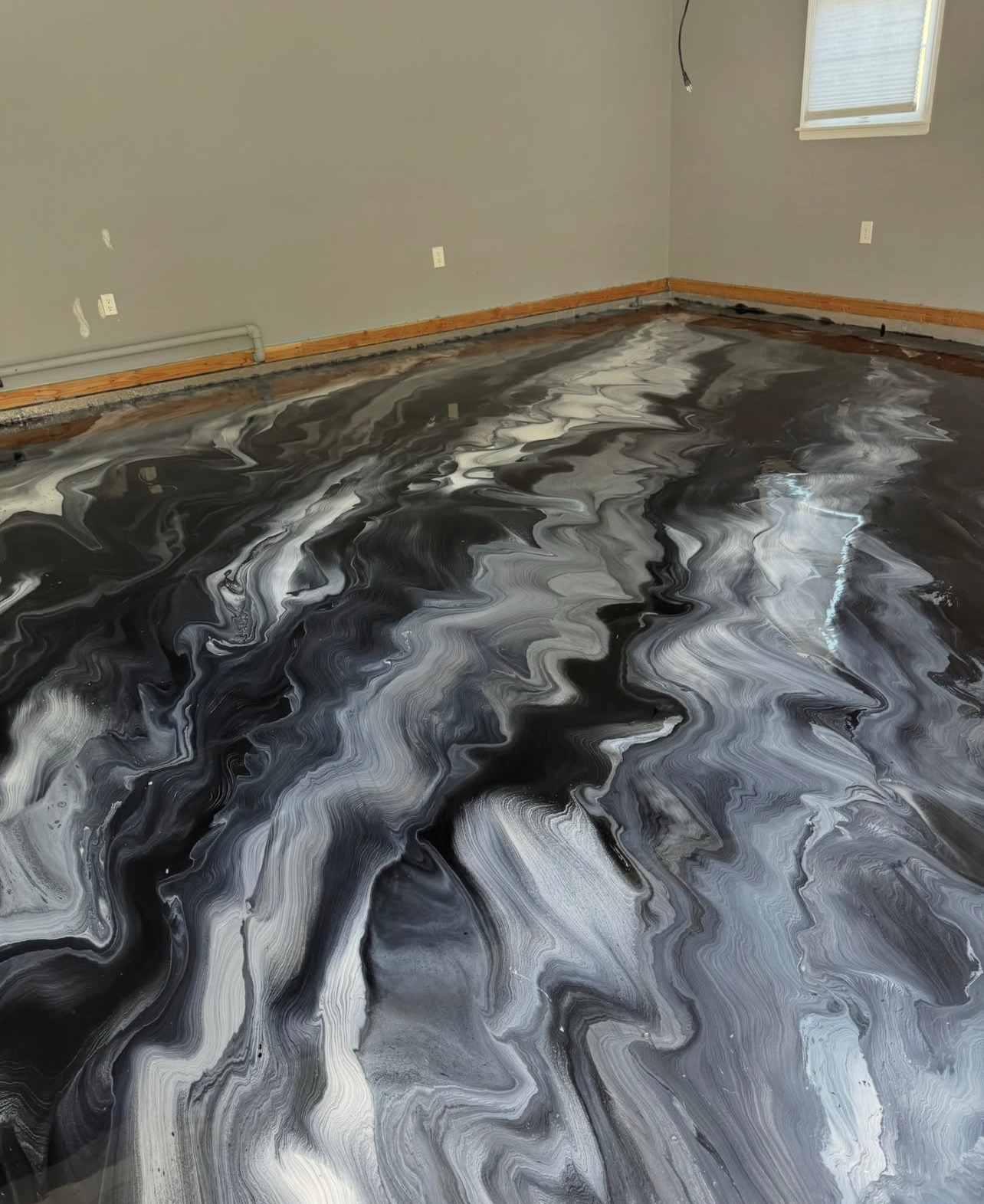
Metallic pigments suspended in epoxy create flowing, three-dimensional patterns that shift in appearance as light moves across the surface. The application involves layering metallic-infused resin over prepared concrete and using techniques that encourage the pigments to swirl and settle in unpredictable ways, producing a finish that differs from installation to installation. Midas Touch Finishes applies metallic flooring systems across Matthews for property owners who want a distinctive appearance that cannot be replicated with standard flake or solid-color coatings. The process requires careful timing and environmental control, as temperature and humidity affect how the metallic particles move within the resin before it cures.
Installation begins with surface preparation to remove contaminants and create a profile for adhesion, followed by application of the metallic coating while conditions allow the pigments to remain mobile. Installers manipulate the wet material using tools that encourage flow and blending, creating the patterns that define the finished appearance. A clear topcoat seals the metallic layer and protects it from abrasion, UV exposure, and chemical contact, while also adding depth that amplifies the visual effect. The topcoat also determines the final sheen level, with higher gloss finishes intensifying the reflective quality of the metallic pigments.
Schedule a property evaluation to discuss metallic color combinations and review how lighting and room layout will affect the finished floor's appearance.
How Metallic Systems Differ from Standard Coatings
Metallic flooring creates visual depth and movement that solid-color and flake systems cannot match, as the pigments catch and reflect light from different angles throughout the day. The patterns are organic and unpredictable, which means that even with careful planning, no two installations will look identical. This variability is part of the design intent, producing a custom appearance that cannot be precisely replicated. The metallic layer also requires more skill to install than conventional coatings, since the installer must work within a narrow time window to manipulate the material before it begins to cure and the pigments lose mobility.
After installation, the floor shows flowing color transitions and reflective shimmer that change as you move through the space, with the topcoat adding gloss that enhances the three-dimensional effect. The sealed surface resists staining, sheds liquids, and cleans easily with routine maintenance, performing similarly to other epoxy systems in terms of durability and chemical resistance. The visual complexity also helps hide minor surface imperfections and wear patterns that would be more obvious on solid-color floors.
Metallic coatings work best in spaces with controlled lighting where the reflective qualities can be appreciated, and they require the same substrate preparation as other epoxy systems to maintain adhesion and prevent delamination. The coating does not repair structural issues or level uneven concrete, and the finished appearance depends heavily on the installer's technique and the specific environmental conditions during application. Color selection and manipulation methods are discussed during planning, though clients should expect variation from any sample or mockup due to the inherent unpredictability of the process.
Questions Before Starting Your Project
Property owners considering metallic floors in Charlotte typically ask about pattern control, color options, and how the finish performs compared to other decorative coatings.
What controls the pattern and flow in metallic flooring?
Installer technique, environmental conditions, and the specific manipulation methods used during application all influence how the metallic pigments move and settle, making each installation unique even when the same colors are used.
How does lighting affect the finished appearance?
The floor's reflective quality means that natural light, artificial light, and viewing angle all change how the metallic patterns appear, with the same surface looking different at various times of day and from different positions in the room
When is metallic flooring preferable to flake or solid coatings?
Clients who want a distinctive, high-impact appearance with visual depth and movement typically choose metallic systems, while those seeking more predictable or uniform results often prefer flake or solid-color options.
How durable is the metallic layer under regular use?
The clear topcoat protects the metallic pigments from abrasion and chemical exposure, allowing the floor to perform similarly to other epoxy systems in terms of stain resistance and longevity when properly maintained.
What preparation does concrete need before metallic coating?
The surface must be mechanically profiled to remove any contaminants, sealers, or coatings that would prevent adhesion, and moisture levels must be within acceptable limits to avoid delamination after the metallic system is applied.
Midas Touch Finishes works with Charlotte property owners to select metallic color combinations and application techniques suited to specific spaces and lighting conditions. Request a detailed estimate to explore color options and discuss realistic expectations for pattern variation and reflective effect in your particular environment.