
Floors Restored to Functional Condition
Wood Floor Refinishing in Charlotte for existing hardwood surfaces showing wear, scratches, or faded stain that compromise appearance
Wood floors lose their protective finish over time as foot traffic, furniture movement, and UV exposure wear through the topcoat and dull the stain beneath. Midas Touch Finishes refinishes existing wood floors in Charlotte by sanding down to bare wood and applying fresh stain and protective coatings that restore appearance and function. The service addresses floors where the finish has worn thin in traffic paths, where deep scratches penetrate the coating, or where the color no longer suits the room's current design—refinishing makes sense when the wood itself remains structurally sound and thick enough to withstand another sanding cycle.
Refinishing involves sanding away the existing finish and a thin layer of wood, applying stain to achieve the desired color, and topcoating with protective layers that resist wear and moisture penetration. The process generates dust despite containment efforts, requires rooms to remain unoccupied during application and drying, and demands careful sequencing when coordinated with painting, trim work, or other interior finishes.
Schedule a floor evaluation to determine whether your existing wood floors are suitable candidates for refinishing and to discuss stain options.
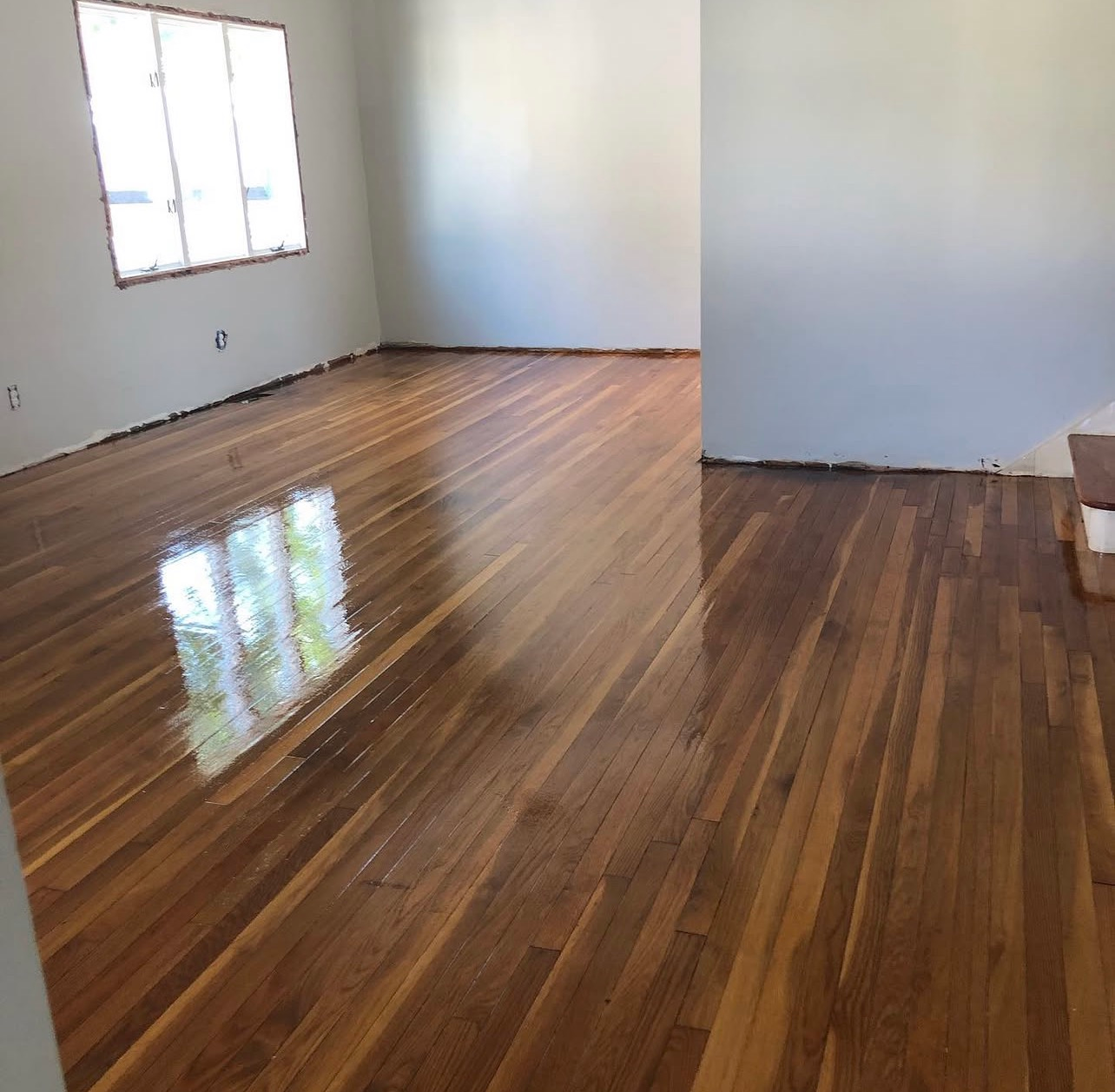
What Refinishing Actually Accomplishes
Sanding removes the old finish, surface scratches, and stains that have penetrated the wood, leveling the floor to bare material and creating a uniform surface for new stain and topcoats. Stain penetrates the wood to add color, and the intensity depends on wood species, grain density, and how much stain the sanded surface absorbs—some areas take stain darker than others due to natural grain variation. Topcoats seal the wood and provide the protective layer that resists scratches, moisture, and daily wear.
Refinished floors display consistent color without the worn paths and dull patches that develop as finishes fail, and the wood grain shows clearly under the new topcoat. Scratches that previously caught light disappear, and the floor reflects ambient light uniformly rather than appearing mottled. The visual refresh changes how the entire room reads—floors that had faded into the background become prominent design elements again, and updated stain colors can shift the space toward warmer or cooler tones depending on selection.
Refinishing fits into remodeling sequences carefully: it follows demolition and rough work but precedes final trim and fixture installation to avoid damaging newly refinished surfaces with tool drops or material drags. Wall painting should complete before floor refinishing to prevent paint drips on fresh finishes, though baseboards often receive final coats after floors cure. Each coat requires drying time, and full cure takes days to weeks depending on coating type and environmental conditions—floors shouldn't bear heavy furniture or rugs until the finish hardens completely.
Common Questions About This Service
Homeowners considering
wood floor refinishing in Mooresville typically want to know whether their floors are suitable and what the process involves.
What determines whether floors can be refinished?
Wood thickness matters—floors need enough material above the tongue-and-groove joint to withstand sanding without compromising structural integrity, and floors that have been refinished multiple times may be too thin for another cycle.
How does refinishing fit into a broader remodel?
Refinishing happens after drywall, painting, and other dusty work completes but before final trim and fixtures install, so the floor isn't damaged by subsequent trades and dust from other work doesn't settle into wet finishes.
Why do some refinished floors show uneven stain color?
Wood grain density varies naturally—denser areas absorb less stain and appear lighter, while porous sections take stain darker, creating the grain figure that's characteristic of wood floors rather than a defect.
When should wood floors be refinished instead of replaced?
Refinishing works when the wood is structurally sound, thick enough for another sanding, and the subfloor beneath remains flat and stable—replacement makes sense when boards are damaged, the floor system has failed, or insufficient material remains for refinishing.
How long before refinished floors are ready for furniture?
Topcoats dry to the touch within hours but require days to cure hard enough for light use and weeks to reach full hardness—heavy furniture, area rugs, and aggressive cleaning should wait until the finish fully cures to avoid marking or adhesion failure.
Midas Touch Finishes refinishes existing wood floors by sanding and restaining suitable surfaces, matching the service to your floor condition and design preferences. Request a floor inspection to assess whether refinishing is appropriate for your Charlotte property.