
Refined Surfaces Without Decorative Overlays
Polished Concrete in Charlotte for clients who want the natural look of concrete with a smoother, more finished appearance
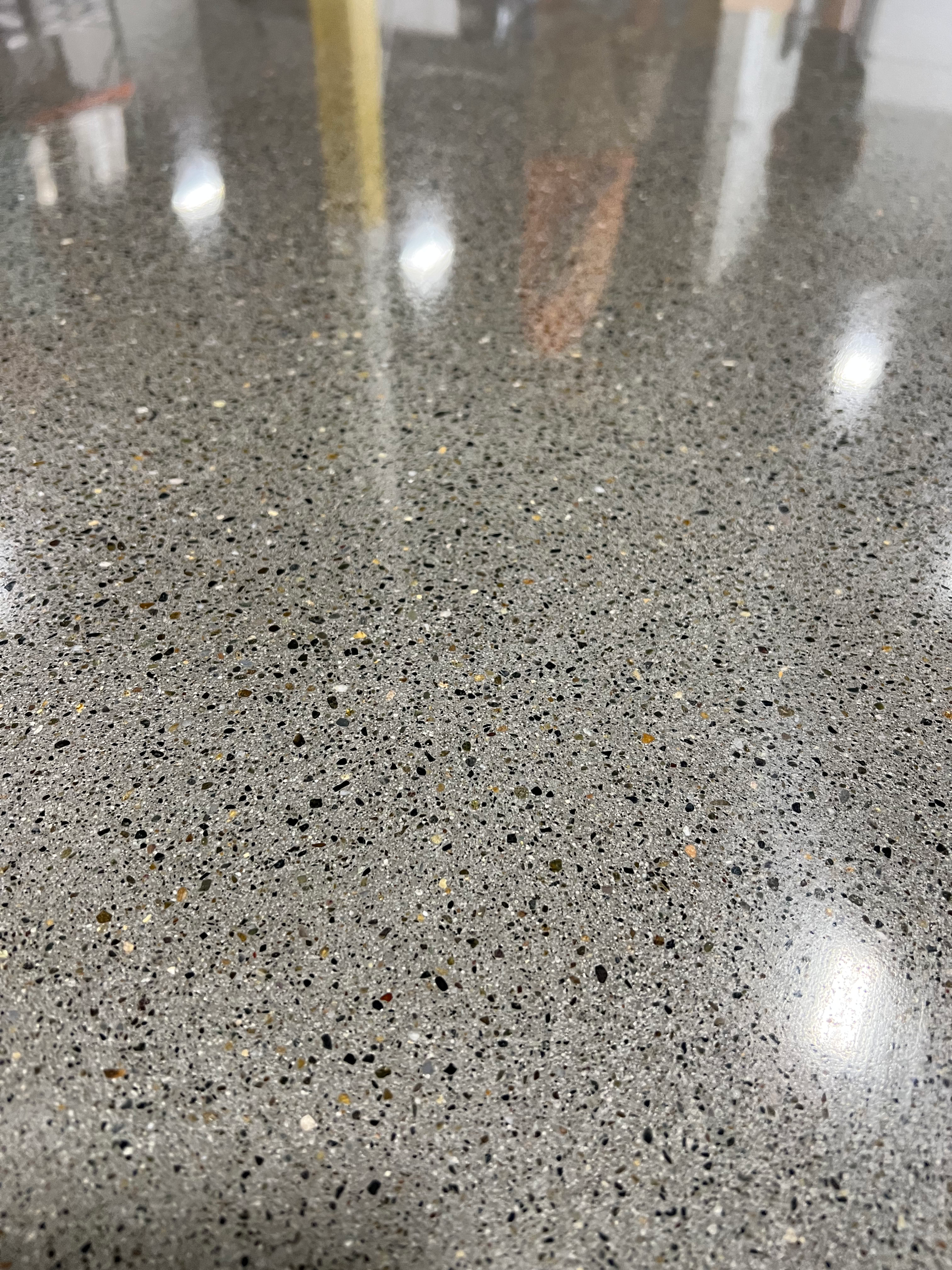
Polished concrete refines the surface through progressive grinding and densification, creating a smooth, low-maintenance floor without adding decorative coatings or overlays. The process mechanically removes the concrete's top layer and exposes the aggregate structure beneath, then densifies the surface to reduce porosity and increase resistance to wear. Midas Touch Finishes completes polishing work across Charlotte for property owners who prefer concrete's industrial character but need a cleaner, more refined finish than what a troweled slab provides. The result is a surface that reflects light, resists dusting, and maintains its appearance without requiring wax or topical sealers that wear away under traffic.
The polishing process involves multiple grinding passes with progressively finer abrasives, application of a liquid densifier that hardens the concrete chemically, and continued polishing to the desired gloss level. The depth of grinding determines how much aggregate becomes visible, with deeper cuts exposing more of the stone and sand within the concrete mix. The densifier step fills the microscopic pores and binds loose particles, creating a harder surface that resists abrasion and moisture penetration more effectively than untreated concrete.
Arrange an on-site consultation to assess whether your concrete is suitable for polishing and discuss the level of aggregate exposure you prefer.
What Proper Polishing Requires
Polishing works only on concrete that is sound, structurally stable, and free of delamination or widespread cracking that would worsen during the grinding process. The slab must have adequate compressive strength and sufficient thickness to withstand the removal of surface material without exposing rebar or compromising structural integrity. Soft or poorly cured concrete may not polish well, as the grinding process can dislodge aggregate or create an uneven finish that lacks the uniform sheen clients expect from a polished floor.
After polishing, the floor shows a consistent sheen that ranges from matte to high-gloss depending on the final grit level used, and the exposed aggregate creates natural color variation that eliminates the need for decorative additives. The densified surface sheds water, resists staining better than raw concrete, and produces far less dust than untreated slabs because the pores are sealed and the surface is hardened. Routine cleaning requires only dust mopping and damp mopping with neutral cleaners, and the floor does not need periodic resealing or wax application to maintain its appearance.
The service does not repair cracks, fill spalls, or level uneven surfaces, though minor imperfections become less visually prominent once the surface is ground smooth and light reflection is increased. Floors with extensive damage or previous coatings may require additional preparation or may not be suitable for polishing if the substrate is compromised. The finished floor performs best in climate-controlled environments, though exterior applications are possible if the concrete is protected from freeze-thaw cycling that would damage the refined surface.
What Property Owners Usually Ask
Clients often ask about aggregate exposure, gloss levels, and whether existing concrete can be polished or if a new slab is required
What determines how much aggregate shows in the finished floor?
The depth of grinding controls aggregate exposure, with shallow cuts revealing only the concrete's cream layer and deeper grinding exposing more of the stone and sand within the mix.
How does gloss level affect the floor's performance?
Higher gloss finishes reflect more light and show a more refined appearance, but they also make surface imperfections and wear patterns more visible compared to lower-sheen finishes that hide minor flaws.
When is polishing not suitable for existing concrete?
Floors with widespread cracking, delamination, soft spots, or previous coatings that cannot be fully removed may not polish successfully, and attempting the process can worsen existing damage or produce uneven results.
How does polished concrete handle moisture exposure?
The densifier reduces porosity and improves stain resistance, but polished concrete is not waterproof and can still be affected by standing water or moisture transmission from below if the slab lacks a proper vapor barrier.
What maintenance keeps polished concrete looking consistent?
Routine dust mopping removes abrasive particles that would dull the surface over time, and damp mopping with pH-neutral cleaners prevents buildup that would obscure the sheen, with occasional reapplication of densifier in high-traffic areas to maintain hardness.
Midas Touch Finishes evaluates concrete condition and discusses realistic outcomes before starting polishing work in Charlotte. Contact us to review your slab's suitability and explore gloss and aggregate exposure options tailored to your space.